Be inspired
What connects a century-old hardwood floor to a twelve-piece wardrobe? More than you might think. Both represent choices—conscious decisions about what to preserve, what to let go, and how to create harmony between the old and the new. This is the essence of intentional living: approaching your home and your closet not as problems to solve, but as canvases for thoughtful expression.
Whether you’re standing in a Victorian parlor wondering how to introduce modern comfort without erasing history, arranging objects on a shelf that somehow never looks quite right, or staring at a closet full of clothes with nothing to wear, the underlying challenge remains the same. You’re seeking balance—between character and function, between visual interest and calm, between investment and practicality.
This collection of insights spans three interconnected domains: preserving and modernizing historic homes, mastering the principles of interior styling, and building a wardrobe that works as hard as you do. Together, they form a philosophy of living with intention, where every choice serves a purpose and nothing exists merely to fill space.
Honoring History While Living in the Present
Owning a historic home is a privilege that comes with responsibility. These structures carry stories in their original trim, their wavy glass windows, and their imperfect plaster walls. The challenge lies in making them livable for contemporary needs without stripping away the very character that makes them special.
The Value Hidden in Original Details
That ornate crown molding or original door hardware isn’t just decorative—it’s an investment. Real estate studies consistently show that original architectural features can account for significant portions of a historic home’s value. Removing them in pursuit of a cleaner aesthetic often proves to be an expensive mistake that’s difficult to reverse.
Consider this before picking up a crowbar:
- Original trim profiles are often impossible to replicate affordably
- Period-appropriate replacements can cost three to five times more than modern alternatives
- Buyers specifically seeking historic homes pay premiums for intact original features
Structural Decisions That Require Caution
The desire for open floor plans has led many homeowners to remove walls without fully understanding structural implications. In older homes, what appears to be a simple partition wall may actually be providing crucial support. Sagging ceilings and compromised foundations are common consequences of well-intentioned but poorly researched renovations.
Similarly, insulating historic brick walls requires understanding moisture dynamics. Brick structures were designed to breathe—trapping moisture between insulation and masonry can lead to freeze-thaw damage, mold growth, and deteriorating mortar joints.
Blending Eras Without Creating Chaos
Modern furniture can absolutely coexist with Victorian architecture, but success depends on understanding visual weight and proportion. A sleek contemporary sofa in a room with elaborate ceiling medallions creates contrast; the key is ensuring that contrast feels intentional rather than accidental.
The most successful historic-modern blends typically follow these principles:
- Maintain the room’s original focal points
- Choose modern pieces with clean lines that won’t compete with architectural details
- Use color and texture to create bridges between eras
- Limit truly contemporary statement pieces to one or two per room
The Invisible Rules of Visual Harmony
Some rooms feel effortlessly pulled together while others seem perpetually unfinished despite being full of beautiful objects. The difference often comes down to principles that professional stylists understand intuitively but rarely explain: the mathematics of visual interest and the strategic use of empty space.
Why Odd Numbers Create Better Arrangements
The human eye processes odd-numbered groupings differently than even pairs. Three objects on a mantel create a natural focal point; four objects create tension as the eye searches for symmetry. This principle, rooted in how our brains process visual information, explains why professional stylists almost always work in groups of three, five, or seven.
This doesn’t mean you need to count every object in your home. Rather, it’s a diagnostic tool: when a vignette isn’t working, check your numbers. Adding or removing a single element often solves the problem.
The Power of Strategic Emptiness
Fear of empty space—what designers call horror vacui—drives many decorating mistakes. Every surface gets covered, every wall gets hung, every corner gets filled. The result is visual noise that exhausts rather than inspires.
Empty space serves essential functions:
- It allows the eye to rest between focal points
- It emphasizes the objects you’ve chosen to display
- It creates breathing room that makes spaces feel larger
- It reduces visual stress and promotes calm
Quality Versus Quantity in Decor
A single statement piece with genuine presence will elevate a room more effectively than a dozen mass-produced fillers. This principle applies whether you’re choosing art, furniture, or decorative objects. Better to have one wall with a meaningful painting than four walls covered in forgettable prints purchased to fill space.
The practical application extends to decor rotation. Rather than displaying everything you own simultaneously, curate collections seasonally. Store pieces and bring them back later—they’ll feel fresh again, and your rooms will maintain visual interest throughout the year.
The Capsule Approach to Personal Style
The same principles that govern successful interior design apply remarkably well to wardrobes. Intentionality, quality over quantity, and understanding what actually works together create closets that function smoothly rather than causing daily frustration.
The Mathematics of Fewer, Better Pieces
Consider the cost-per-wear calculation: a $300 coat worn a hundred times costs $3 per wear, while a $100 coat that falls apart after thirty wears costs $3.33. Extend this thinking across your wardrobe, and the case for investing in quality becomes mathematically undeniable.
This explains why many successful executives wear similar outfits daily. They’ve optimized for decision fatigue reduction, choosing pieces they know work together and wearing them repeatedly without apology. The practice isn’t about lacking creativity—it’s about directing creative energy toward higher-priority decisions.
Building a Functional Core
A twelve-piece work capsule wardrobe isn’t a restriction—it’s a framework. When every piece coordinates with multiple others, you multiply outfit possibilities while minimizing closet real estate. The key lies in selecting pieces that:
- Fit impeccably—poor fit ruins even expensive garments
- Work together in color and formality level
- Serve your actual lifestyle, not an imagined one
- Maintain their appearance through repeated wearing and cleaning
Avoiding the Neutral Trap
Minimalist wardrobes risk becoming boring when reduced to endless beige and gray. The solution isn’t abandoning neutrals—it’s understanding how to add visual interest through texture, proportion, and strategic color placement. A navy blazer, a white shirt, and gray trousers become distinctive through fabric quality, perfect fit, and one unexpected element: an interesting watch, a subtle pattern, a distinctive shoe.
Seasonal transitions don’t require wardrobe overhauls. Three strategic additions—perhaps a lighter layer, a transitional shoe, and an updated accessory—can shift an entire capsule from winter to spring without starting from scratch.
The Common Thread: Living With Intention
Whether you’re deciding to refinish century-old floors rather than replacing them, choosing one perfect lamp over three adequate ones, or investing in a coat you’ll wear for a decade, you’re practicing the same discipline. You’re resisting the cultural pressure to consume without consideration, to fill without purpose, to replace rather than maintain.
This approach requires patience. It means living with an empty corner until you find the right piece. It means wearing the same blazer repeatedly while saving for the next quality addition. It means researching before renovating, understanding before removing, considering before purchasing.
The reward is a life surrounded by objects and spaces that genuinely serve you—homes that honor their history while accommodating your present, rooms that feel curated rather than cluttered, and wardrobes that dress you well without demanding daily decisions. This is what it means to be truly inspired: not by trends or accumulation, but by the quiet confidence that comes from intentional choices made well.
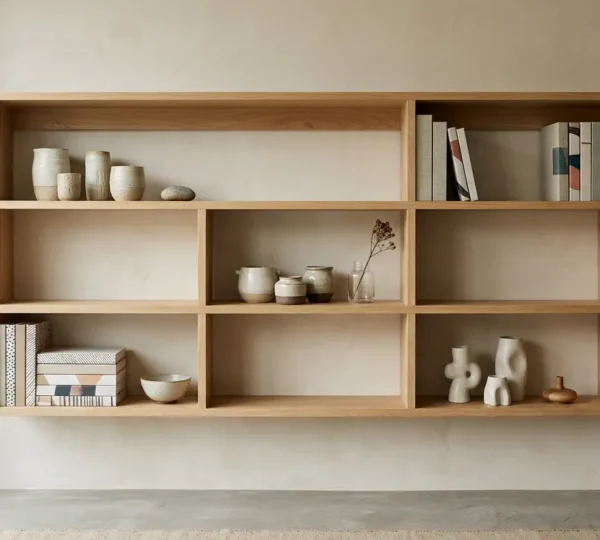
The Art of the Open Shelf: A Stylist’s Guide to Curation Over Clutter
The secret to beautiful open shelving isn’t what you add, but what you subtract; true style comes from intentional curation, not just accumulation. Effective styling is a form of visual storytelling, where each object has a purpose and contributes to…
Read more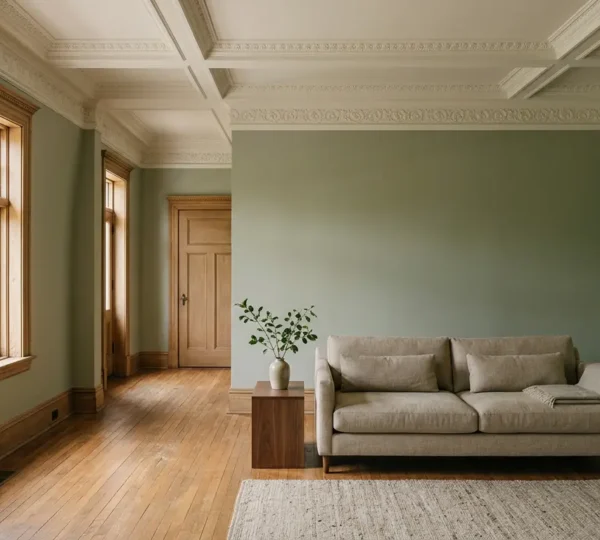
How to Modernize a 1920s Home Without Destroying Its Soul?
The biggest mistake in modernizing old homes isn’t the design choices, but fundamentally misunderstanding their original ‘functional grammar’. Original features like trim and plaster walls are not merely decorative; they are integral parts of the home’s structural and environmental system….
Read more