In summary:
- Authentic cuisine is a direct reflection of “terroir”—the specific geography, climate, and history of a place.
- Learn to decode culinary signals: a short, handwritten menu in the local language is a far better sign of quality than a glossy, multi-language picture book.
- Prioritize human connection over convenience through vetted home-dining platforms, which often provide a more genuine cultural immersion than any restaurant.
There is a unique disappointment reserved for the traveling food lover: the moment you realize the meal you’ve been waiting for, the one meant to be a deep dive into a new culture, tastes generic, soulless, and suspiciously like it was microwaved. You followed the common advice—you avoided the main square, you looked for restaurants “crowded with locals” (who turned out to be other tourists)—yet here you are, eating a pale imitation of the real thing. This experience is so common it has become a travel cliché.
The conventional wisdom for avoiding these “tourist traps” is a list of red flags, a strategy of avoidance. But what if the key wasn’t simply about dodging the bad, but about actively understanding the good? What if you could learn to read the food landscape of a city like a food anthropologist, decoding the subtle signals that point toward true authenticity? Authentic food isn’t a secret menu you find; it’s a cultural system you learn to read. It’s about understanding that food is an expression of a place, a concept known as terroir.
This guide moves beyond simple “dos and don’ts.” It provides a framework for developing your own culinary literacy. We will explore how geography shapes a menu, how to connect with the real gatekeepers of culinary tradition—home cooks—and how to discern quality from the farm to the table, whether it’s at a bustling street stall or a remote mountain dairy. It’s time to stop being a passive consumer and start being an active participant in the food stories of the places you visit.
To help you navigate this culinary journey, this article breaks down the essential skills and knowledge needed to uncover truly authentic food experiences. The following summary outlines the key areas we will explore, providing a roadmap to becoming a more discerning and culturally aware traveler.
Summary: A Food Anthropologist’s Guide to Eating Authentically
- Why Coastal Cuisine Differs Drastically From Inland Dishes in the Same Region?
- How to Connect With Home Cooks for Private Dining Experiences?
- Street Stalls vs Tourist Restaurants: Which Is Safer and Tastier?
- The ‘Menu in 5 Languages’ Red Flag: Signs a Restaurant Is for Tourists Only
- Sequence & Plan: Visiting Local Markets at 6 AM for the Best Produce
- Why Slow-Growth Mountain Cheese Tastes More Complex Than Factory Cheese?
- Direct Trade vs Fair Trade: Which Returns More Money to the Grower?
- How to Ship Wine Home From Abroad Without Breaking Customs Rules?
Why Coastal Cuisine Differs Drastically From Inland Dishes in the Same Region?
The single most important factor determining a region’s authentic cuisine is its geography. Before global supply chains, chefs cooked with what was available locally. This simple constraint is the mother of all culinary invention and the foundation of “terroir.” A food anthropologist reads a map before they read a menu. Understanding the interplay between land and plate is the first step toward culinary literacy. The most dramatic example of this is the culinary divide between a region’s coast and its interior.
Consider Italy: the rich, butter- and cream-based sauces of the northern, landlocked regions reflect a history of dairy farming in its lush pastures. As you travel south, the landscape becomes sun-drenched and olive groves dominate. Here, olive oil becomes the primary fat, and cuisine lightens, embracing tomatoes, herbs, and citrus. This isn’t a stylistic choice; it’s a direct expression of the environment. According to research on global culinary geography, this pattern is universal. Coastal regions worldwide emphasize fresh seafood, often using quick cooking methods like grilling or steaming to preserve delicate flavors. Conversely, inland areas focus on livestock and agriculture, developing preservation techniques like curing, smoking, and slow-cooking to tenderize tougher cuts of meat and utilize seasonal harvests.
Recognizing this pattern is a powerful tool. If you see a restaurant in a mountain village miles from the sea heavily advertising “fresh lobster,” it’s a red flag. It signals a disconnect from the local food system, catering to a generic tourist palate rather than celebrating the region’s own bounty. A truly authentic restaurant embraces its geographical identity, and its menu tells the story of the surrounding land and sea.
This understanding of place allows you to anticipate what a region’s true flavors should be, making you an informed and discerning diner before you even step inside a restaurant.
How to Connect With Home Cooks for Private Dining Experiences?
While restaurants can offer a window into a culture’s cuisine, a home-cooked meal offers a seat at the family table. This is the inner sanctum of culinary tradition, where heritage recipes are passed down through generations. For the traveler seeking the deepest level of authenticity, connecting with a home cook is the ultimate goal. In recent years, a number of online platforms have emerged to facilitate these “peer-to-peer” dining experiences, but they are not all created equal. The key is to choose platforms that prioritize safety, authenticity, and a genuine cultural exchange over transactional dining.
Engaging in a home dining experience is not like booking a restaurant; it’s entering a personal space and participating in a social ritual. It requires a different mindset—one of a respectful guest, not just a customer. The best platforms understand this distinction and thoroughly vet their hosts. For instance, platforms like EatWith and Traveling Spoon have rigorous vetting processes that include in-person visits and interviews. This focus on curating hosts who are passionate about sharing their culture, not just making a quick buck, is a strong signal of quality. Your role as a guest is to honor this by being communicative, respectful, and genuinely curious.
Your Action Plan: Connecting with Home Cooks
- Identify Points of Contact: Start by researching vetted platforms known for their rigorous host verification, such as EatWith, Traveling Spoon, or VizEat.
- Gather Intelligence: Scour host profiles, prioritizing those with detailed personal stories (“This is my grandmother’s recipe for mole”) over generic marketing language. Look for reviews that mention cultural exchange.
- Assess Coherence & Communicate: Clearly communicate any dietary restrictions or allergies during the booking process, not upon arrival. This shows respect for the host’s planning and preparation.
- Plan for Memorable Engagement: Research local customs regarding guest etiquette. Prepare a few thoughtful questions about their family recipes, cooking techniques, or the story behind the meal. A small, culturally appropriate gift is often a welcome gesture.
- Finalize the Integration Plan: Confirm all details, arrive on time, and approach the experience with an open mind and a genuine desire to connect. Treat the meal as a conversation, not a transaction.
By choosing the right platform and adopting the right mindset, you can unlock one of the most rewarding and authentic travel experiences possible.
Street Stalls vs Tourist Restaurants: Which Is Safer and Tastier?
For many travelers, street food represents a culinary frontier, simultaneously tempting and intimidating. The pervasive myth is that street stalls are inherently less safe than brick-and-mortar restaurants. However, from a food anthropologist’s perspective, a well-chosen street food vendor is often a beacon of authenticity and, surprisingly, safety. The key is learning to read the environmental cues that signal quality and hygiene, turning fear into a calculated assessment.
Counterintuitively, a busy street food stall can be safer than a quiet restaurant. The reason is simple: high turnover. A long line of locals indicates that the food is not sitting around in the temperature “danger zone” (between 5°C and 63°C) where bacteria multiply. The food is cooked and sold quickly. Furthermore, the public nature of a street stall creates transparency; you can see the ingredients, the cooking process, and the cleanliness of the operation in plain sight. A restaurant kitchen is hidden. In fact, a study across several major U.S. cities found that restaurants consistently had more critical food safety violations than mobile food vendors. One part of the study noted that in Washington D.C., restaurants had 11.5 times more critical violations than mobile vendors.
To navigate the world of street food successfully, you need a framework for assessment. The image below highlights a key principle: high heat. Sizzling oil and billowing steam are your friends; they are visible indicators that food is being cooked at temperatures that kill harmful bacteria.
Beyond observing the cooking method, developing your “culinary literacy” for street food involves checking for other positive signals. A focused, limited menu is a great sign. A vendor making only three or four items to perfection suggests specialization and fresh preparation. An enormous menu, by contrast, often relies on frozen or pre-made ingredients. Here are some other key indicators to look for:
- High Turnover: A long, fast-moving line of locals is the best possible endorsement.
- Visible Cleanliness: Look for a clean water source for washing, protected ingredients, and a tidy workspace.
- Separation of Duties: Ideally, the person handling money should not be the same person preparing your food without washing their hands or changing gloves.
- Natural Preservation: Many street food staples incorporate natural preservatives like high acidity (vinegar, lime), fermentation (pickles, kimchi), or high salt content.
By learning to spot these signs, you can confidently enjoy some of the most delicious, affordable, and culturally significant food a destination has to offer.
The ‘Menu in 5 Languages’ Red Flag: Signs a Restaurant Is for Tourists Only
You’re walking down a charming cobblestone street and a friendly host beckons you toward a restaurant. The menu outside is a glossy, laminated affair featuring pictures of every dish and translations in English, German, French, Spanish, and Mandarin. This is not a sign of helpful hospitality; it is a blaring siren, a quintessential red flag signaling a tourist trap. An authentic restaurant cooks for its community first; a tourist trap casts the widest, most generic net possible.
The core issue with such establishments is that they optimize for tourist volume, not for quality or authenticity. The “menu in 5 languages” is just the most obvious symptom of a deeper problem. The business model relies on a constant stream of new, non-repeat customers, so there is little incentive for culinary excellence or faithfulness to tradition. The food is often a simplified, dumbed-down version of the local cuisine, designed to be inoffensive to a broad range of palates rather than a true representation of local flavor. Learning to recognize these warning signs is crucial for any food-conscious traveler.
Red Flags: The Tourist Trap Warning Signs
- A multilingual, laminated menu with photos for every dish.
- “Hawkers” or staff stationed outside aggressively trying to pull pedestrians in.
- An overly extensive menu that spans multiple, unrelated cuisines (e.g., pizza, paella, and Pad Thai all in one place).
- A prime location directly next to a major monument, with prices to match.
- A dining room filled exclusively with other tourists, with no local clientele in sight during peak local meal times.
- Serving dinner much earlier than the local custom (e.g., at 6 PM in Spain).
Green Flags: Indicators of Authenticity
- A short, handwritten menu (or a chalkboard) that changes daily or seasonally, often only in the local language.
- A location on a side street, a few blocks away from the main tourist drag, in a residential neighborhood.
- A clientele of mixed-age locals, including families and elderly diners.
- A clear specialization in a specific type of regional food (e.g., “seafood only” or “traditional wood-fired pizza”).
- Waitstaff who assume you speak the local language but are happy to help translate when asked.
- Modest, “lived-in” decor that feels personal rather than designed for Instagram.
By training your eyes to spot these green flags, you will begin to see the hidden culinary landscape that exists just beyond the tourist bubble.
Sequence & Plan: Visiting Local Markets at 6 AM for the Best Produce
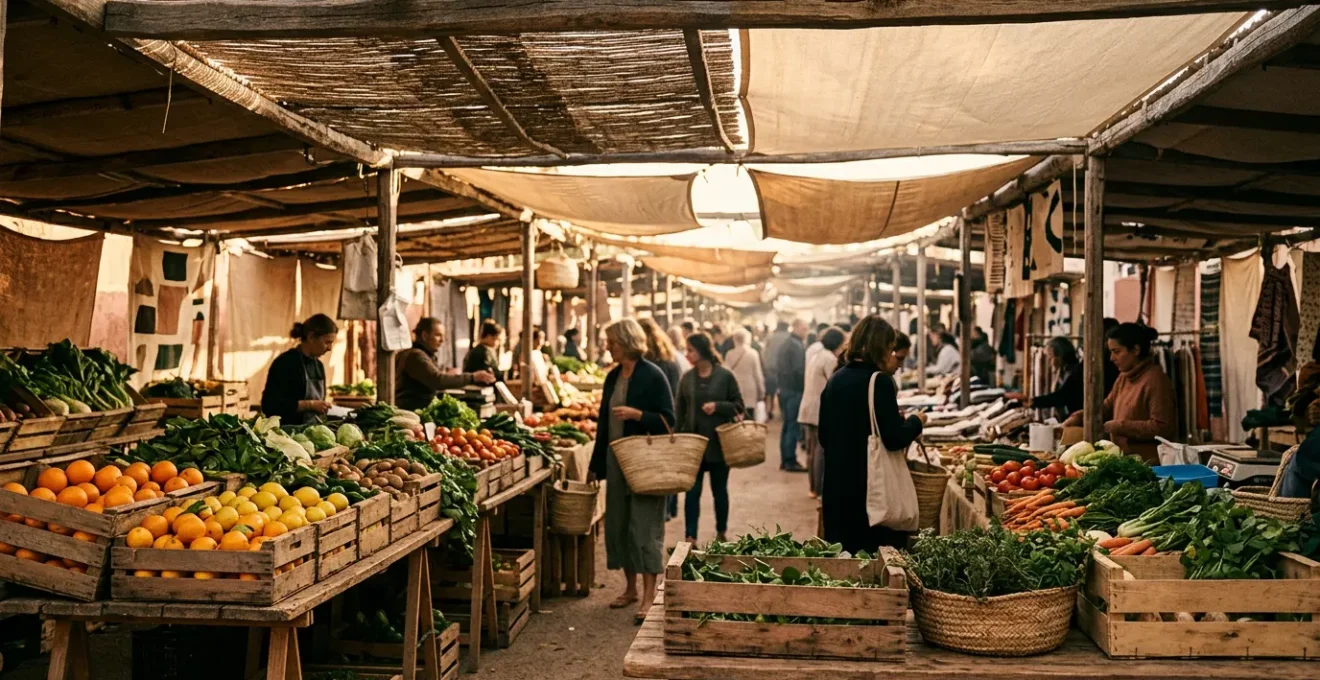
To truly understand a city’s food culture, you must visit its heart: the central market. And to see the market in its most authentic state, you must arrive when it truly comes alive—at the crack of dawn. A 6 AM market visit is not about getting the “best produce” for yourself; it’s an anthropological expedition. It’s about witnessing the foundational layer of the entire local food system before it gets polished for consumers.
At this early hour, the market is not for tourists. It’s a B2B hub. You will see the city’s top chefs, recognizable in their whites, haggling with trusted purveyors over cases of glistening fish or just-picked herbs. You will see restaurateurs and small shop owners making their daily buys, their hands and noses acting as quality control instruments refined over decades. This is where the daily narrative of the local cuisine begins. Listen to the conversations (even if you don’t understand the words), observe the handshakes, and note which stalls attract the professionals. The vendors who supply the best restaurants are the ones with the highest quality goods.
This experience provides an invaluable “source code” for your culinary explorations. Take note of the produce that is in season and abundant; this is what you should expect to see on the menus of authentic restaurants later in the day. If you see mountains of beautiful artichokes at the market, a restaurant offering an “out-of-season” asparagus dish is immediately suspect. The 6 AM market visit recalibrates your expectations and arms you with the knowledge to discern what is truly local and seasonal, transforming you from a passive tourist into an informed observer.
It’s a raw, unfiltered look at the passion and commerce that underpins every great meal you will have on your trip.
Why Slow-Growth Mountain Cheese Tastes More Complex Than Factory Cheese?
The difference in taste between a slow-growth mountain cheese and its factory-made counterpart is a masterclass in the concept of terroir. It’s not just cheese; it’s a compressed, edible snapshot of an entire ecosystem. A food anthropologist tastes not just fat and protein, but the story of the land, the animals, and the traditions that created it.
The complexity begins with the animal’s diet. A cow, goat, or sheep grazing on a high-altitude mountain pasture consumes a diverse polyculture of grasses, wildflowers, and wild herbs. Each of these plants contains unique aromatic compounds that pass into the animal’s milk. This biodiverse diet creates a milk that is a complex symphony of flavors before the cheesemaking even begins. In contrast, a factory farm animal eats a standardized, high-energy monoculture diet, typically of corn or soy. This produces a high volume of milk, but it’s a blank canvas, lacking the nuanced aromatic precursors found in the milk of a grazing animal.
The “slow-growth” aspect is equally critical. Animals raised in challenging mountain environments mature more slowly, and their milk is often lower in volume but higher in fat and protein solids. This concentrated milk provides a richer base for the cheesemaker. The cheesemaking process itself is also different. Artisanal mountain cheesemakers often use raw milk, which contains a rich community of native bacteria and yeasts. These endemic microflora, unique to that specific farm or valley, contribute significantly to the cheese’s flavor as it ages. This is microbial terroir. Factory cheese, on the other hand, is almost always made from pasteurized milk, which kills off this native microbiome. The cheesemaker then adds a standardized, commercially produced starter culture, resulting in a predictable but far less complex flavor profile. The slow, cool aging process in a mountain cellar allows for a gradual development of flavor, while factory cheeses are often aged rapidly in controlled environments to speed up time to market.
What you taste in a great mountain cheese is the essence of a place: the summer rain, the alpine flowers, the cool cellar air, and generations of knowledge.
Direct Trade vs Fair Trade: Which Returns More Money to the Grower?
For the conscientious traveler, the story of their food doesn’t end on the plate; it extends back to the person who grew or produced it. In the world of commodity crops like coffee, cocoa, and tea, “Fair Trade” and “Direct Trade” are two models that aim to create a more equitable system. While both seek to improve the lives of growers, they operate on different principles. Understanding this distinction is part of reading the deeper economic “terroir” of the products you consume.
Fair Trade is primarily a certification system. A third-party organization (like Fair Trade USA or FLO-CERT) sets standards for labor conditions and environmental practices. For a product to be certified, buyers must pay at least a minimum “Fair Trade price,” which acts as a safety net when market prices are low. They also pay an additional “Fair Trade premium,” which the growers’ cooperative can invest in community projects like schools or healthcare. It’s a model designed to provide a floor of stability and social benefit, and it works at a large scale.
Direct Trade, on the other hand, is a relationship model, not a formal certification. It describes a sourcing philosophy where a roaster, chocolatier, or buyer builds a direct relationship with a specific farmer or cooperative, cutting out the traditional middlemen (importers, exporters). In theory, the money saved by eliminating these intermediaries can be passed on to the grower, resulting in a higher price than the Fair Trade minimum. This model often focuses intensely on quality, as the direct feedback loop allows buyers to incentivize specific farming or processing practices that lead to a better final product. The downside is that it lacks the third-party verification and formal safety net of Fair Trade. The price paid is entirely dependent on the negotiation and the ethics of the individual buyer.
So which returns more money? The answer is “it depends.” Direct Trade has the *potential* to return more money to the grower on a per-pound basis, especially for exceptional quality lots. However, it relies on the buyer’s commitment. Fair Trade provides a guaranteed floor and a community premium, offering broader security, especially for growers who may not have access to specialty markets. Neither is perfect, but both represent a conscious effort to move beyond the exploitative nature of the conventional commodity market.
As a traveler, seeking out cafes or shops that champion either of these models is a way to ensure your consumption positively contributes to the places you visit.
Key Takeaways
- Think like a geographer: An authentic menu is dictated by the local landscape—seafood on the coast, preserved meats inland. What’s fresh and in season at the market should be on your plate.
- Trust data over fear: A busy street food stall with a high turnover of local customers is often a safer and more authentic choice than a quiet, empty tourist restaurant.
- Value connection over convenience: Seek out small, specialized eateries or use vetted platforms to dine with home cooks. The most memorable meals are conversations, not just transactions.
How to Ship Wine Home From Abroad Without Breaking Customs Rules?
You’ve found it: a small, family-run winery in a sun-drenched valley, producing a wine that tastes like the landscape in a bottle. It’s the perfect edible souvenir, a liquid memory of your journey. But getting those precious bottles home can be a logistical and legal minefield. Successfully shipping wine home is the final step in honoring the terroir you’ve discovered, but it requires careful planning to navigate the complex web of customs rules, taxes, and shipping regulations.
The first and most critical step is to understand your own country’s import laws. Regulations vary wildly. Some countries have generous duty-free allowances for alcohol carried in your luggage, while others are extremely restrictive. Shipping is a separate issue entirely. The United States, for example, has a complex three-tier system, and laws about receiving alcohol shipments differ from state to state; some states prohibit it entirely. European Union citizens benefit from easier movement of goods within the EU, but shipping from outside the bloc still involves customs declarations.
Your best ally in this process is often the winery itself. Reputable wineries that are accustomed to international visitors will have experience with shipping and will likely have a preferred logistics partner. They can advise you on the feasibility and cost of shipping to your home country. If the winery doesn’t offer this service, you’ll need to use a specialized wine shipping company. These companies are experts in navigating customs, providing temperature-controlled shipping (crucial for protecting wine from extreme heat or cold), and ensuring proper packaging to prevent breakage. Do not be tempted to simply mail the wine yourself through the standard postal service; it is illegal in many countries and will likely result in your wine being confiscated.
By doing your research and using professional services, you can ensure your liquid memories arrive safely and legally at your doorstep, ready to be uncorked and shared.